Not every story needs a book. Sometimes, it just needs a small object that holds meaning.
We collect items all the time—ticket stubs, keychains, handmade gifts—and we do it because those things help us remember. They help us tell people, this mattered. And for individuals, families, and even nonprofits, finding the right memento can turn a fleeting experience into something lasting.
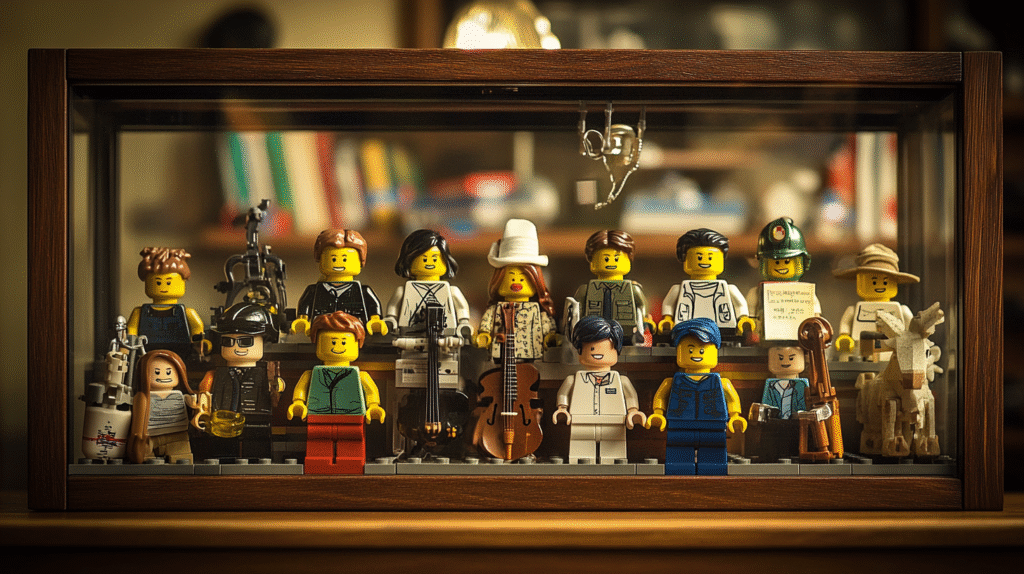
Lately, one of the more unexpected ways I’ve seen this play out is through mini-figures. Tiny characters. Small props. A few inches tall but loaded with intent. They’re surprisingly effective at capturing identity, moments, and emotion. And if you’ve never used one to tell a story, it might be worth considering.
Why Small Works
When someone gives you a custom mini-fig that looks like you—or someone you love—it lands differently than a plaque or certificate. It’s not loud. It’s not flashy. But it’s specific.
And being specific matters. A small figure holding a stethoscope can represent a nurse’s 40 years of work. A figure in a graduation robe can capture the joy of a first-gen college student. A little family scene can say more than a framed slogan ever could.
I think what makes it work is the scale. Something about shrinking a story down into a few inches makes it feel both safe and meaningful. You can hold it. You can place it somewhere you’ll see every day. It doesn’t ask for attention, but it always has a presence.
The Role of Mini-Figs in Personal Milestones
We’ve all been to events where the keepsakes are forgettable. Maybe it’s a printed program. Maybe it’s a tote bag. But now and then, you see someone do something different—something that clearly took some care.
A custom mini-fig can show up in all kinds of personal moments. I’ve seen them used in adoption announcements, where the new family is represented with tiny, smiling figures. I’ve seen them on birthday cakes, not just as decoration but as characters that reflect the person being celebrated. One had a violin. Another had a wheelchair and a paintbrush. Small details, but they made people cry. In a good way.
For weddings, I’ve seen couples make entire sets of figures to represent the wedding party. Not stiff or generic. Actual nods to the personalities in the room. One had the groomsmen all in mismatched sneakers. Another had the bridesmaids holding books instead of bouquets. The guests noticed. And many took theirs home.
How Nonprofits Are Using Them Too
It’s not just personal events. Some nonprofits are getting creative with how they use mini-figs to tell the stories of the communities they serve.
One group working with kids on the autism spectrum started including mini-figs in their donor mailings. Each one came with a short story—a real one—about a student’s experience. The figures weren’t fancy. But they reflected the kids. And people kept them. They put them on desks, shelves, dashboards.
Another nonprofit focused on literacy gave mini-figs to volunteers and donors who helped run their reading nights. Each figure held a tiny book. That’s it. But it stuck. It became a marker of involvement, something small that meant, you helped.
There’s something about the combination of visual storytelling and tangible objects that works. Especially for groups that don’t have big budgets or flashy materials. It’s a way to say, this is who we are, and we see you too.
Symbolism Over Perfection
You don’t have to get every detail right for a mini-fig to mean something. Honestly, the best ones aren’t perfect copies. They’re symbolic.
Let’s say you’re trying to honor a founder who passed away. You don’t need to sculpt their face. You just need the beard. The flannel shirt. The tiny coffee mug they always carried. That’s enough. People will recognize it instantly.
Or maybe you’re telling the story of a volunteer who’s been with your organization since day one. Give them a tiny clipboard. A baseball cap. A dog at their feet. Suddenly it’s not just a toy—it’s a portrait.
You’d be surprised how much emotion fits into a three-inch figure.
Where These Figures Are Coming From
There are a few makers out there who get this. Who understand that it’s not about toys—it’s about narrative.
I came across minifig.biz while helping someone design a keepsake for a retirement party. They were one of the only places that offered both fully assembled figures and customizable details. Not just generic business suits or cartoon haircuts. Actual combinations that felt grounded.
What I appreciated was that their stuff didn’t feel cheap or promotional. The figures had weight. The printing was clean. And you could choose from themes that felt relevant—healthcare, education, arts, public service. They even had options for wheelchairs, guide dogs, lab coats, musical instruments. That matters.
You can tell when something is designed with care, even if it’s small. That’s kind of the point of this whole article.
The Emotional Side of Objects
We don’t always talk about how objects carry emotion. But they do. Think about the items you keep even when you’re trying to clean out your closet. The random magnet from a trip. The pen from your dad’s desk. The bookmark your friend made for you.
These things tell stories. And they don’t ask for attention. They just stay.
Mini-figs work in the same way. Especially when they’re given at the right moment. A figure at the end of a training program. A character to honor someone’s recovery journey. A small version of someone’s family after a major milestone. They’re not loud. But they’re meaningful.
And let’s be honest: we need more of that.
A Few Ideas to Steal
If you’re wondering how you might use this kind of memento, here are a few starting points:
- Volunteer appreciation – Custom figures that reflect the work done: aprons, brooms, garden tools, books.
- Fundraiser incentives – Give mini-figs to donors at specific tiers. Not as merchandise. As connection.
- Retirement and transitions – A symbolic figure to say, we remember what you did here.
- Support group milestones – Honoring the tough stuff. Sobriety anniversaries. Grief processing. Caregiver support.
- Classroom stories – Teachers and students building their class as a mini-fig scene. A visual memory of the year.
None of this has to be expensive. And you don’t have to mass-produce anything. You can start with just one. Tell one story. Hand it to someone and say, this reminded me of you.
That’s the kind of moment people don’t forget.
Final Thought
Stories don’t always need to be told with words. Sometimes, they can be told with objects. Quietly. Gently. Through color and shape and posture.
A mini-fig on a desk can say, I was there. It can say, I matter. And it can remind someone of a connection they don’t want to lose.
I’ve seen this happen over and over—at events, in nonprofits, in families. It’s not about collecting stuff. It’s about remembering moments.
So if you’re looking for a way to honor someone’s story—maybe yours, maybe someone else’s—consider starting small. Consider building something with care. And if you need help figuring that out, places like minifig.biz make it surprisingly doable.
That little figure might not say much. But it will say enough.