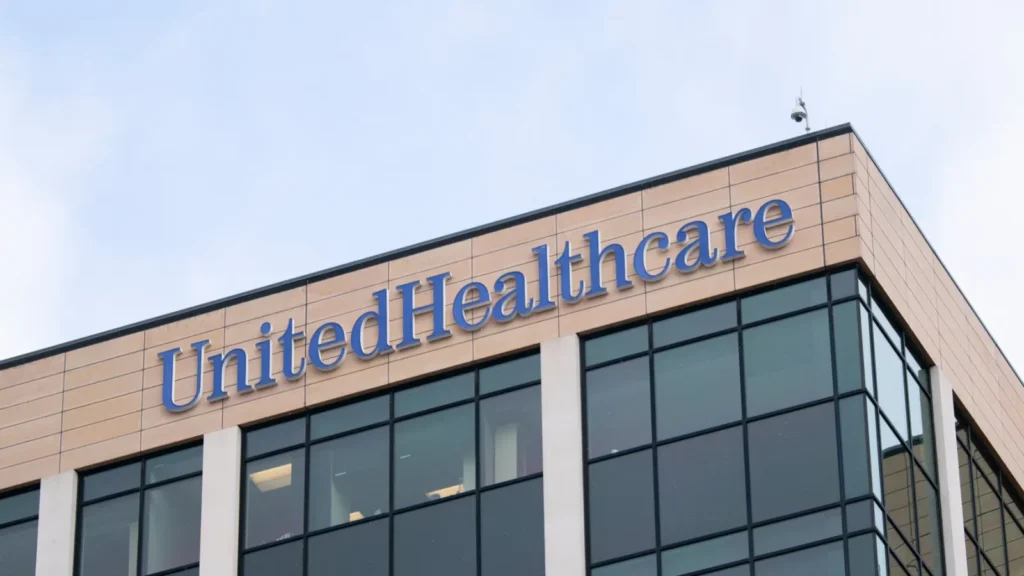
Two months after Brian Thompson, the CEO of UnitedHealthcare, was shot to death outside a Midtown Manhattan hotel, the company is showing that it’s done tolerating what it views as “misinformation” about its practices. Critics say the effort is a blatant attempt to stifle public anger over claims denials, broken promises, and the general frustration Americans feel when dealing with for-profit health insurance. But UnitedHealthcare insists it’s trying to prevent dangerous rhetoric and protect its reputation.
Below is a closer look at what has happened so far and why the backlash could get louder in the coming weeks.
The Shock That Followed an Assassination
On a December morning in New York City, Thompson was gunned down on a sidewalk while on his way to an investors meeting. The prime suspect in the case is a man named Luigi Mangione, who allegedly left a short manifesto calling health insurers “parasites” and praising those who challenge corporate giants. The shooting stunned the health care industry. Executives throughout the sector kept mostly quiet as UnitedHealthcare reeled from public sympathy for the assassin. On social media, Mangione was showered with support from individuals who described him as a vigilante.

In the immediate aftermath, UnitedHealthcare stayed low. The tragedy raised questions about whether the insurer would moderate some of its most unpopular practices—especially coverage denials and prior authorization requirements. Instead, people watched as UnitedHealth Group’s stock price dipped, then rose again, with the public still seething over how coverage claims often get denied for seemingly arbitrary reasons.
When Doctors Speak Out
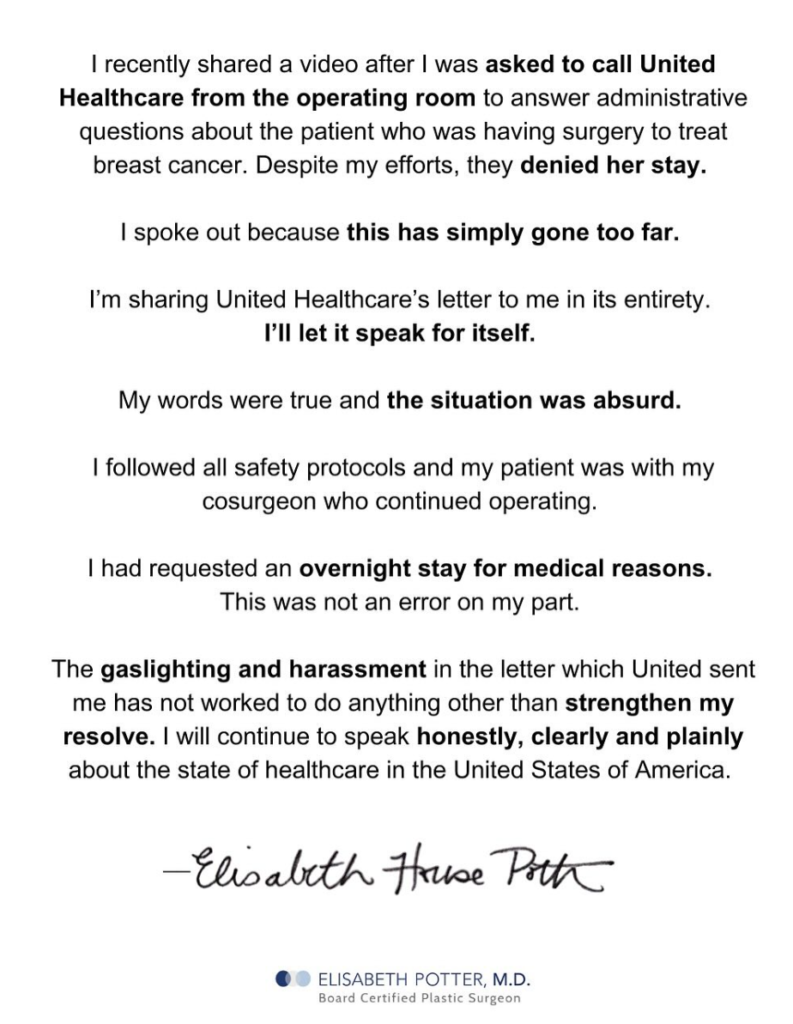
One of the more prominent critics to surface was Dr. Elisabeth Potter, a board-certified plastic surgeon in Austin, Texas. In early January, Potter posted a video to social media describing a phone call she says she received from UnitedHealthcare while she was performing reconstructive breast surgery on a patient who had endured cancer. Potter explained that she felt compelled to scrub out of the operating room to take the insurer’s call. If she ignored it, she feared that coverage for her patient’s overnight stay might get denied on a technicality, leaving the patient in a risky spot both medically and financially.
That post blew up, attracting hundreds of thousands of likes and an onslaught of comments. Many expressed outrage that a doctor could be interrupted mid-procedure with what some considered a pointless or meddling call. Several urged Potter to stand firm. But a handful of people also invoked the name of Mangione, calling him a “hero.” That sentiment disturbed UnitedHealthcare. They claimed Potter’s video incited threats of violence, and not long after, Potter received a letter from the defamation law firm Clare Locke, one with a reputation for winning large settlements. The letter, signed on behalf of UnitedHealthcare, alleged that Potter was spreading “misinformation” by suggesting she was called out of surgery and that she knowingly allowed malicious comments to remain on her social media posts.
Potter insists she told the truth, that her patient had been pre-approved for the surgery, and that she’d never dealt with such an interruption before. She also explains that a second surgeon was present, so her patient wasn’t left in danger. “It’s out of control,” Potter said of the phone call. “We should focus on care, not bureaucracy.” UnitedHealthcare demanded that she remove her posts, apologize, and retract what they called “knowingly false statements.” They said they never insisted she step away from the table—that, in fact, the call wasn’t urgent at all. But Potter claims UnitedHealthcare did exactly that, and she blames their complicated system for leading to last-minute coverage challenges.
https://www.instagram.com/p/DFlR1CrJ688
Legal Threats and Public Reaction
Potter’s story is only one of several. Other doctors have been sounding off about prior authorization nightmares—cases in which an approval is granted and then yanked, or where a denial arrives long after a procedure is finished. Each anecdote follows the same pattern: insurers quietly shift blame, and a torrent of paperwork puts doctors on the defensive.
From Potter’s perspective, the bigger problem is that insurers do not trust medical professionals to act in patients’ best interests. She believes this has a chilling effect on how doctors practice, as they’re forced to jump through hoops to keep a claim alive. Many see the dispute in black-and-white terms: is the callousness of health insurance companies a function of “profit over patient,” or a byproduct of an overtaxed, complicated system?
UnitedHealthcare obviously worries that unfiltered public anger could turn deadly again, especially given the adoration Mangione has received in some corners of the internet. That may be why the insurer became more proactive in confronting negative stories. For instance, not only did they call out Dr. Potter, they also flagged a post by billionaire hedge fund manager Bill Ackman to the Securities and Exchange Commission. Ackman had hinted—then quickly deleted—that the company’s profits might be inflated by systematically denying necessary care. UnitedHealthcare described his remarks as “grossly uninformed” and pointed out that health insurers, “which typically have low- to mid-single digit margins,” are heavily regulated.
Shareholder Proposals and Apologies
The friction between UnitedHealthcare and its critics is not limited to social media. The parent entity, UnitedHealth Group, has taken steps to keep certain shareholder proposals off the ballot at upcoming investor meetings. Some proposals sought an audit of the company’s denial rates, particularly in cases where the denial might have contributed to a patient’s death. One plan even suggested that, if an independent auditor finds a claim should never have been denied, the company should send a formal apology to those families. Another shareholder measure would require UnitedHealth to analyze how often coverage delays or rejections push patients to skip procedures or forgo critical treatment.
In letters to the SEC, UnitedHealth Group argued that these proposals were “impermissibly micromanaging” the company. They also said the proposals were too vague to be enforceable. Critics say this is a way to stop uncomfortable questions about how many people’s lives have been upended—or lost—due to coverage denials. UnitedHealth, for its part, downplays the significance. They argue they already evaluate and refine internal processes. In their view, demanding a third-party analysis is an attempt to shame the company without offering workable solutions.
A Chilling Effect?
Will UnitedHealthcare’s pushback keep other physicians from airing their grievances? Some might decide they can’t afford legal threats, especially if they’re already juggling overhead costs and tight schedules. Others will speak up anyway. Everyone in America who has fought an insurance claim knows how stressful it can get—imagine adding a legal threat to that. The question is whether these public controversies will morph into sustained activism, perhaps propelling new legislation around insurance reform.
Observers wonder: could these battles in the boardroom or on social media nudge regulators to crack down on certain insurance practices? Or will the issue get lost in the swirl of bigger headlines? Some medical professionals are cheering Potter on. They see her experience as the clarion call for an industry they believe has lost its moral footing. At the same time, patients who have survived harrowing coverage disputes are stepping forward with their own stories, fueling the emotional intensity.
The Bill Ackman Angle
Ackman’s short-lived attack on UnitedHealthcare was notable not only for its substance—he basically claimed the company might be hiding the scale of its profits—but for its immediate aftermath. It showed how swiftly the insurer will respond, even when the criticism is only online speculation. UnitedHealthcare told the SEC that Ackman’s comments were irresponsible, and soon the company’s stock price wobbled. Then Ackman deleted his posts.
Did that solve anything? Possibly not.
Some see this as a corporate muscle flex. A wealthy figure like Ackman can withstand threats, so it’s telling that he backed away. Others think he was simply being cautious. After all, the stock price dipped about 2.7 percent in the wake of his claims, reminding everyone that even the hint of impropriety can scare off investors.
A System Under Scrutiny
Dr. Potter’s story, Bill Ackman’s speculation, and the swirl of calls for transparency are all symptoms of a deeper problem. Americans resent a health care system in which “approval” stands between them and necessary care. They question why any coverage, once pre-approved, can be reversed at the last second. They ask how insurers can claim to value patients first when an overnight hospital stay is regularly called into question.
There’s also the question of whether corporate policy might shift to appease a public that’s losing faith. Some have pointed to the stark difference in approach after the murder of Thompson. Initially, there was an outpouring of grief, plus condemnation of political violence. But in the next moment, UnitedHealthcare was on the defensive, blocking shareholder proposals and sending stern letters to doctors. That approach suggests the company is more anxious than ever to shut down anything that might inspire the next Mangione. Yet in doing so, they risk fueling the suspicion that they care more about image than patient well-being.
Medical Necessity Versus Corporate Approval
Much of the fury that’s surfaced revolves around the concept of medical necessity. For doctors, it’s straightforward: if a person needs an overnight stay, that’s the end of the debate. If a patient’s health is at risk without a service, it should be covered. Insurers look for nuance, disclaimers, and cost-cutting measures. The argument is that they keep prices under control by reviewing claims to prevent unnecessary procedures. But doctors often say this stifles their ability to provide timely treatment.
Potter’s frustration is echoed by other surgeons, pediatric specialists, and hospice caregivers. Some speak of advanced approvals being denied retroactively. Families with terminally ill children have been told, mid-care, that they’re on the hook for astronomical bills. The result can be devastating. It leaves professionals and parents feeling powerless. It also feeds the online chatter that had some individuals, however disturbingly, celebrate the slaying of an executive.
The Road Ahead
It’s still early in the trial process for Mangione, and coverage of his case will likely shine a fresh spotlight on UnitedHealthcare. More allegations may surface, from patients and doctors who say they were unfairly denied or hassled by the insurer. If those allegations come with graphic details about preventable suffering, that could spark an even stronger outcry. UnitedHealthcare’s strategy of going after outspoken critics may backfire, at least in terms of public perception.
Meanwhile, defamation law firms aren’t cheap. Some observers question why a company with billions in annual revenue would spend so heavily on hush letters instead of using that money to, in Dr. Potter’s words, “fix their broken system.” People in the comments sections of Potter’s social media posts don’t mince words. They call the insurer bullies and vow never to work with them again. Others say they’re trapped in a plan their employer chose, leaving no alternative.
Conclusion
For many Americans, UnitedHealthcare’s stand against negative social media posts feels like a reminder of how powerful and inescapable insurance companies can be. Dr. Potter’s case has turned her into an accidental symbol of the clash between front-line medical care and corporate oversight. She remains defiant, insisting she did nothing wrong and simply told the truth about a phone call that happened in the middle of a complex breast reconstruction.
Whether UnitedHealthcare will ease its stance or double down on legal threats is anyone’s guess. Some suspect the next few months will bring a wave of new disputes, and as people see more stories of last-minute denials and doctors forced to fight for coverage, the tension could escalate. One thing is clear: with the memory of Thompson’s murder still fresh, this story isn’t about to end quietly. If anything, the debate about how far insurers can go to protect their bottom line—versus the right of patients and doctors to speak freely—may only intensify.